
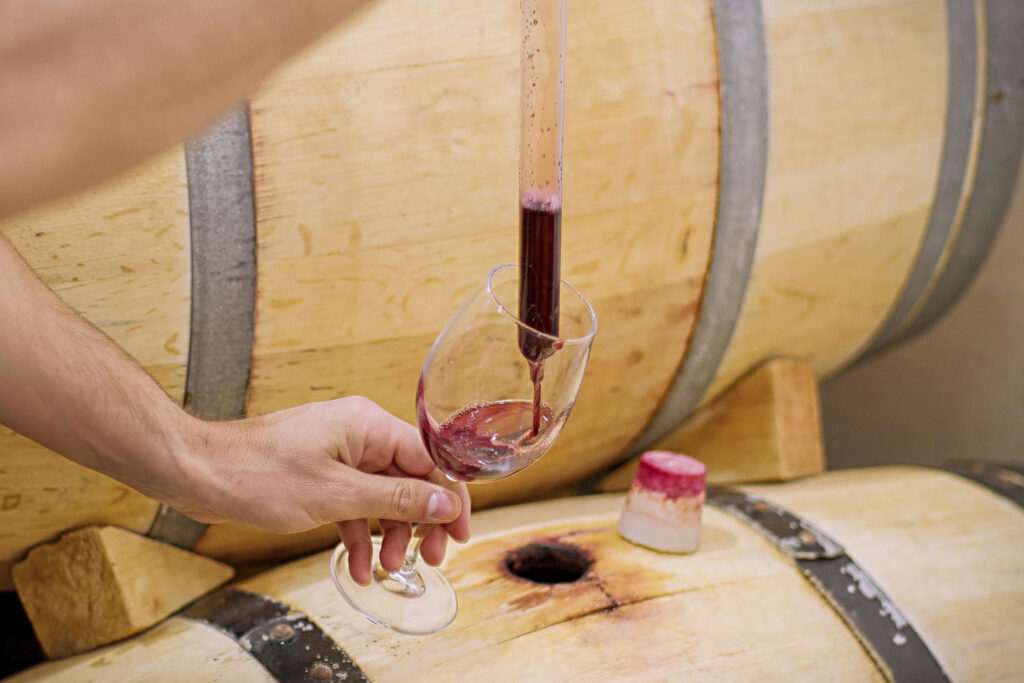
The drink of the gods – red wine, which we all love, carries with it something more than just taste. It is a combination of technology, careful winemaking, a long process of aging and, not least – love. To prepare it in the best possible way, not only knowledge and recipes are necessary – on the contrary. Each step must be carried out with attention to the process, the right approach, and a true passion for the craft.
Let's look at how red wine is made. The answer to this question cannot fit in a simple sentence. It’s an entire process, filled with details that often remain invisible to the end consumer. That is why today we have decided to present to you the whole process from start to finish – and make you a part of it.
The biggest difference between white and red wine is not in the color of the grape itself, but in how it is processed. With red wine, the juice stays in contact with the skins during fermentation. This is where the “magic” lies – from them come the color, structure, and some of the aromas of the drink.
Anthocyanins are natural coloring agents found in grape skins. They provide the various hues – from bright ruby to deep garnet. But color is just one part of wine.
Tannins are just as important. They create the sensation of dryness in the mouth and give wine its structure. This is not a flaw – on the contrary, it is precisely tannins that allow the wine to age and develop over time.
In this context, the term “phenolic ripeness” is often mentioned. This is the point when the skins, seeds, and pulp are in perfect balance. If the grapes are harvested too early, tannins can be harsh. If the harvest is delayed, the structure of the final product can become heavy and out of harmony.
Choosing the right moment for harvest is one of the most important decisions in the entire winemaking process. It is not only about the grapes being sweet enough. Winemakers monitor several key indicators – sugar level, acidity, taste, and the condition of the skins. While hand-harvesting allows for selection on the vine – only healthy and well-ripened bunches are picked – the machine method is faster, but does not deliver the same precision.
Attention should also be paid to the terroir. This term unites climate, soil, altitude, and even the vineyard’s exposure. Terroir is among the most important factors for the final product – the wine in the glass. It is the combination of all these elements that creates the drink as we know it. In regions like Sakar, conditions are ideal for ripening red varieties, leading to more concentrated and full-bodied wines.
Once the grapes are picked, the actual red wine technology begins. It involves a series of stages that together transform the grapes into the drink of the gods. Here’s what they are.
The first step is separating the berries from the stems, done to avoid excessive bitterness that can come from the stalks. Then the berries are crushed lightly – enough to release the juice, but without breaking the seeds. At this point, the basis of the future wine begins to take shape.
Before the actual fermentation starts, cold maceration is often applied. The grape must is cooled and left to rest for several days. This way anthocyanins and aromatic compounds are extracted without activating alcoholic fermentation. The result is more intense color and a fruitier profile.
This is the moment when the wine comes to life. During alcoholic fermentation, the yeast converts sugar into alcohol, releasing heat and carbon dioxide. Fermenting red wine with skins is a key process – it is at this stage that tannins and structure are extracted. This is one of the most important steps.
When fermentation begins, the skins float to the surface forming a dense layer known as the “cap”. If it’s not managed, contact with the juice is reduced. That’s why many winemakers punch it down or pump juice over it. This not only enhances extraction but also keeps the fermentation temperature even in the vessel.
The fermentation temperature of red wine with skins usually ranges between 22 and 30°C. This is not by chance. Lower temperatures preserve aromas but may prevent enough color extraction. Higher temperatures extract more tannins but risk losing freshness. That’s why fermentation temperature control is one of the most important elements in the whole process.
Although the alcoholic fermentation is finished, the wine is still not completely "ready". A secondary process follows – malolactic fermentation. Here, the sharper malic acid is converted into softer lactic acid. The difference is immediate – the taste becomes lighter, softer, and more pleasant. This stage is almost mandatory for red wines, especially if a more complex taste is desired to impress the audience.
After all the active processes comes the time for patience. The wine begins to develop its character. Here, how it will age – in oak barrels or in stainless steel tanks – is of great importance.
Aging wine in oak barrels is a stage that can completely change the end result. Small barrique barrels allow gentle contact of the liquid with oxygen, which softens the tannins.
Additionally, the wood imparts new aromas – vanilla, caramel, spices, even subtle hints of leather or tobacco. All this depends on the origin of the oak and the degree of toasting.
You can also experience the different nuances of wine through tasting. During such an event, you will learn how and when to taste the wine to experience the different emotions it conveys. And decanting remains one of the key moments that activates various flavors. If you have the opportunity to visit such an event, don’t miss it. It will teach you many important things about wine, its nuances, and some little details with which you can amaze your friends at a dinner party.
If you want to enjoy this style of wine, check out our selection of red wines, where you will find different examples of bottles with various stages of barrel aging. We at Katarzyna Estate will surprise you with amazing aromas, flavors, and stories.
Blending is not just mixing a few wines – it is a much more complex process that requires experience, intuition, and taste. Through it, different varieties or batches are combined to achieve a balanced drink with a unique character. This technique should be carefully performed by specialists in the field to avoid the deterioration of any batch.
We at Katarzyna Estate use this approach to create more complex wines. In this way, we give every bottle depth, style, and finesse that impress and stand out from the mass-market offerings. One variety may bring aroma, another – structure, a third – freshness. We strive to enrich every bottle and turn it into a true gem.
And so, this is how red wine is made – the drink of the gods. Its production is a process that blends science and intuition. Every step – from harvesting to aging red wine in oak barrels – matters and leaves its mark. Each stage defines the final taste of the bottle. We at Katarzyna Estate pay special attention to every phase of the winemaking process to ensure that every bottle reaching store shelves is an excellent representation of what we believe in. And that is, every wine carries its own flavor, style, and aroma.
If you are ready to see for yourself, order your bottle of red wine now. Use our online store, where you will find a variety of red wines with different grape varieties and flavors. Place your order today, and we guarantee fast delivery to your doorstep!
And if you want to find out more details about growing, producing, and aging wine, check out our other articles. See how white wine is made and learn why it is so popular.
But the best way to understand all this remains one – to taste. Taste wines from different regions, with different styles and vintages. That’s how you will discover which wine is “yours”. Share it with friends – its taste is always better when shared.
Red wine often feels more astringent because of its higher tannin content, extracted from the skins and seeds during fermentation.
Aging red wine in oak barrels or steel tanks depends entirely on the wine’s style and the producer’s goals. Usually, it takes between 6 and 24 months, but the period varies for each variety.
When we call a wine “dry,” we usually mean that almost all the sugar has been converted to alcohol. The drink then has no sweet taste
Sediment at the bottom of the bottle is usually due to natural particles, such as tannins and pigments. These separate over time and settle.
Not in the classic sense, because the skins lack anthocyanins.
Fermentation of red wine with skins usually occurs at temperatures around 20 to 30°C, depending on the style you want to achieve.
A blend is a mix of different wines or grape varieties, created to achieve better balance and complexity.
This is a process prior to fermentation, where the crushed grapes rest with the skins at low temperature. It allows for greater extraction of pigments, making the wine’s color richer. The process is often applied to varieties where more elegance is desired.
“New” French oak imparts more aromas and flavors to the wine – vanilla, spices, caramel, and even a subtle smoky note. Older barrels, on the other hand, have less influence, allowing the fruit character of the wine to stand out.
The body of wine actually determines whether it is light or full-bodied. It is defined by the content of sugars, alcohol, and tannins in the drink.
Phenolic ripeness shows how mature the grape seeds and stems are. When they are fully ripe, the risk of unwanted bitter and herbaceous flavors in the wine is significantly reduced.
Not every red wine needs to be decanted. Young and lighter wines can often be consumed directly, without extra treatment.